
Programmatic SEO Is Not Dead. Empty Scale Is.
Google doesn't penalize automation. It penalizes empty pages that earn nothing.

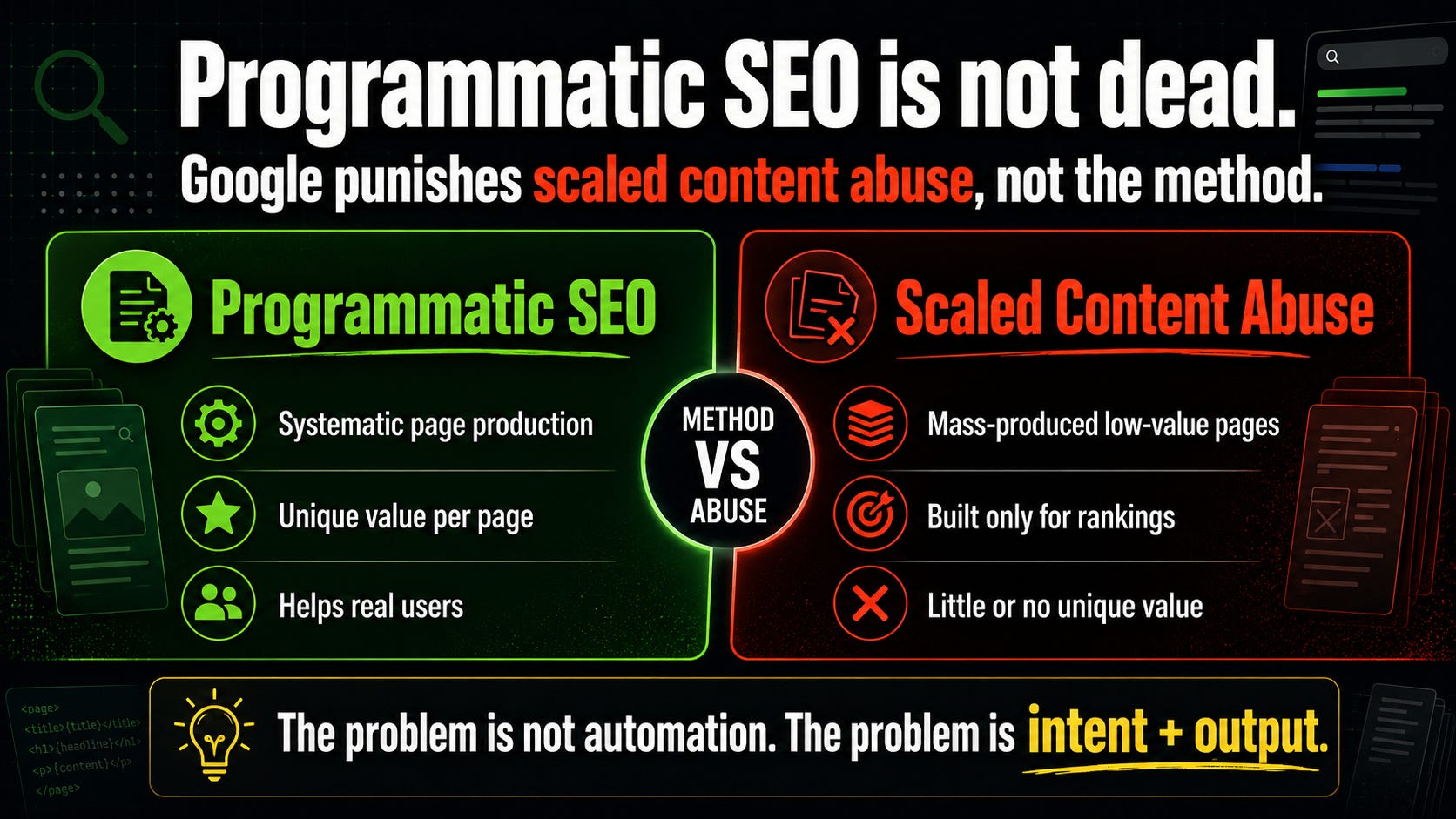
Everyone repeating “programmatic SEO is dead” read the guidelines halfway. Google does not punish programmatic SEO. What it punishes is scaled content abuse. The problem was never the method. The problem is intent plus output.
Why this matters
If you build sites, run affiliate projects, or manage large content operations, this distinction decides whether your pages rank or get wiped in the next update. Most people optimize against the wrong enemy. They try to hide automation when they should be auditing value. So let me draw the line clearly, because getting this wrong costs you the entire project.
The line Google actually draws
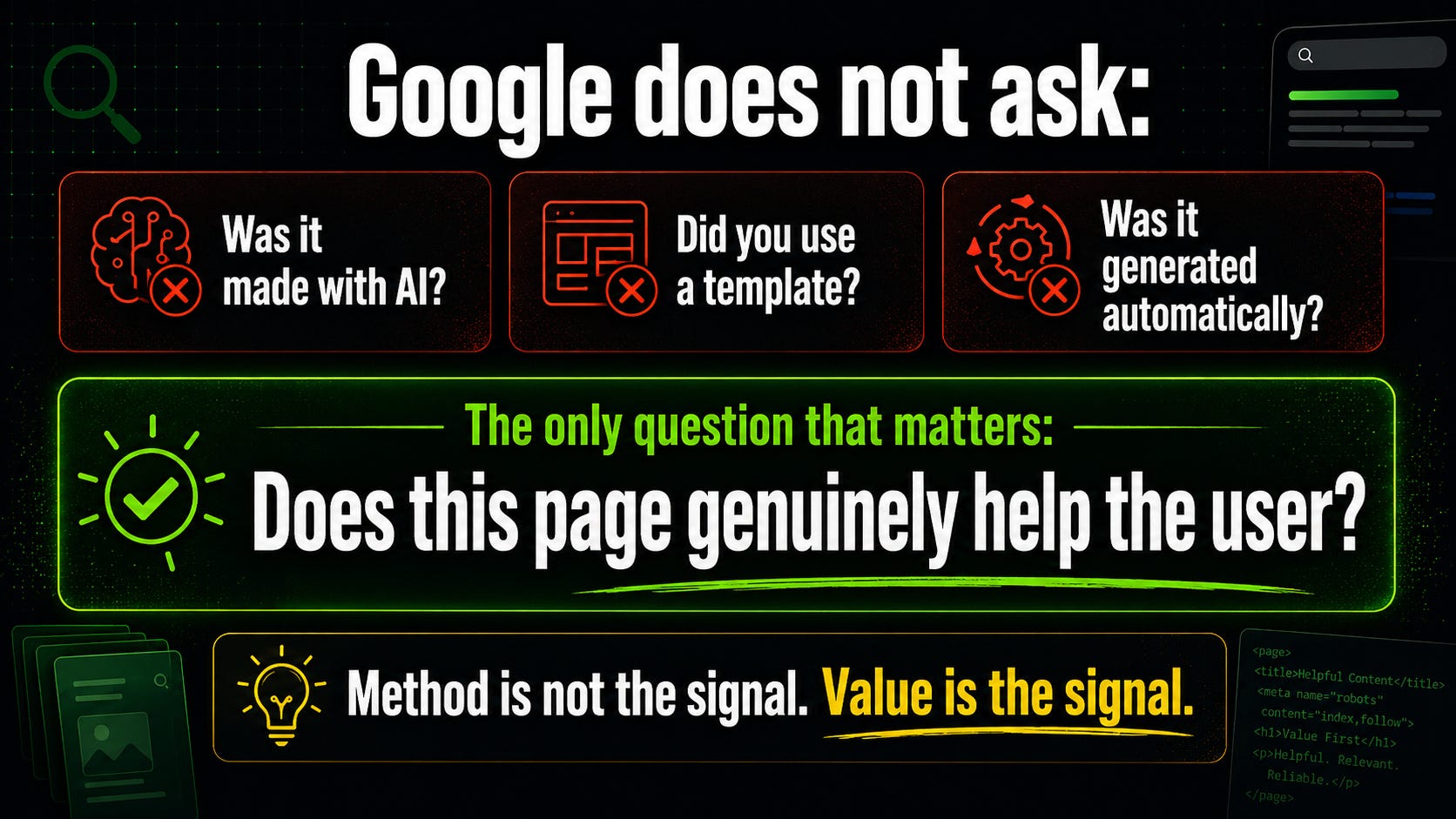
Google’s real question is not “Was this made with AI?” or “Did you use a template?” or “Was the page generated automatically?”
None of those are problems on their own.
The only question that matters is this: does this page genuinely help the person who landed on it?
Programmatic SEO is systematic page production. Scaled content abuse is mass producing pages that add no value, built only to capture search traffic. These are not the same thing. One is a method. The other is a behavior. You can use the method without the behavior, and that is the entire game.
Here is the test in practice. Building 10,000 city pages is not a problem. But if every page only swaps the city name, “Best X in Istanbul,” “Best X in Ankara,” “Best X in Izmir,” and the content underneath is identical, that is where risk begins.
And it does not matter who wrote it. Asking a human editor to write 2,000 cookie cutter pages can be spam. Generating 2,000 pages with a script can be spam. The production method is not the signal. The reality of the value produced is the signal.
Good programmatic SEO vs empty scale
Good programmatic SEO adds unique data to every page. It answers a specific user intent. It offers comparison, filtering, calculation, or analysis. It produces content that helps someone make a decision, not filler text. Scale exists, but so does value.
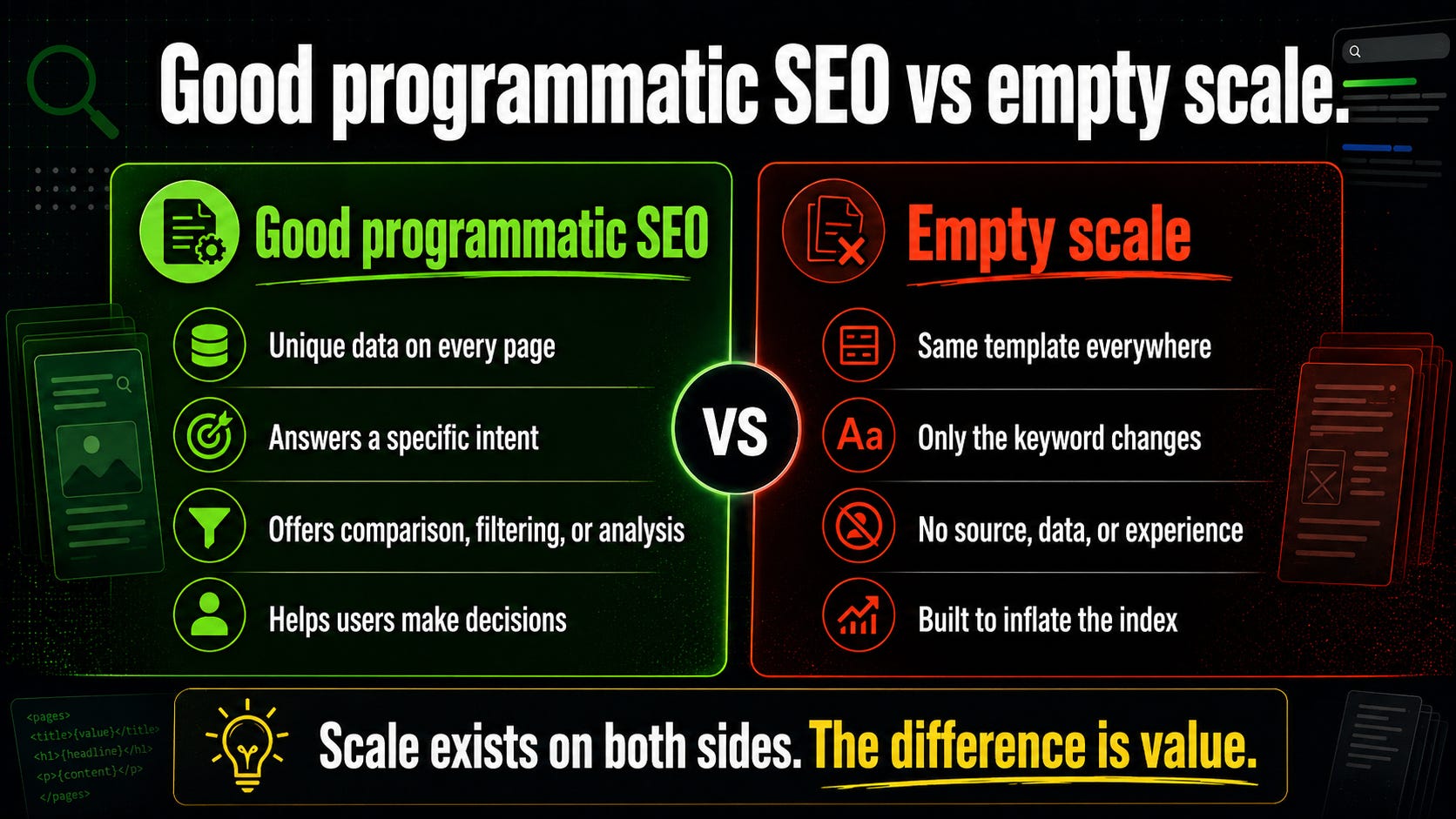
Bad programmatic SEO is the opposite. Same template. Same sentences. Only the keyword changes. No source, no data, no experience, no real user intent. That is not SEO. That is index inflation.
So the right question is not “Will I get penalized if I do programmatic SEO?” The right question is “Does each one of these pages, on its own, deserve to show up in Google?” If the answer is no, the problem is not programmatic SEO. The problem is that the page did not earn its place.
The short version
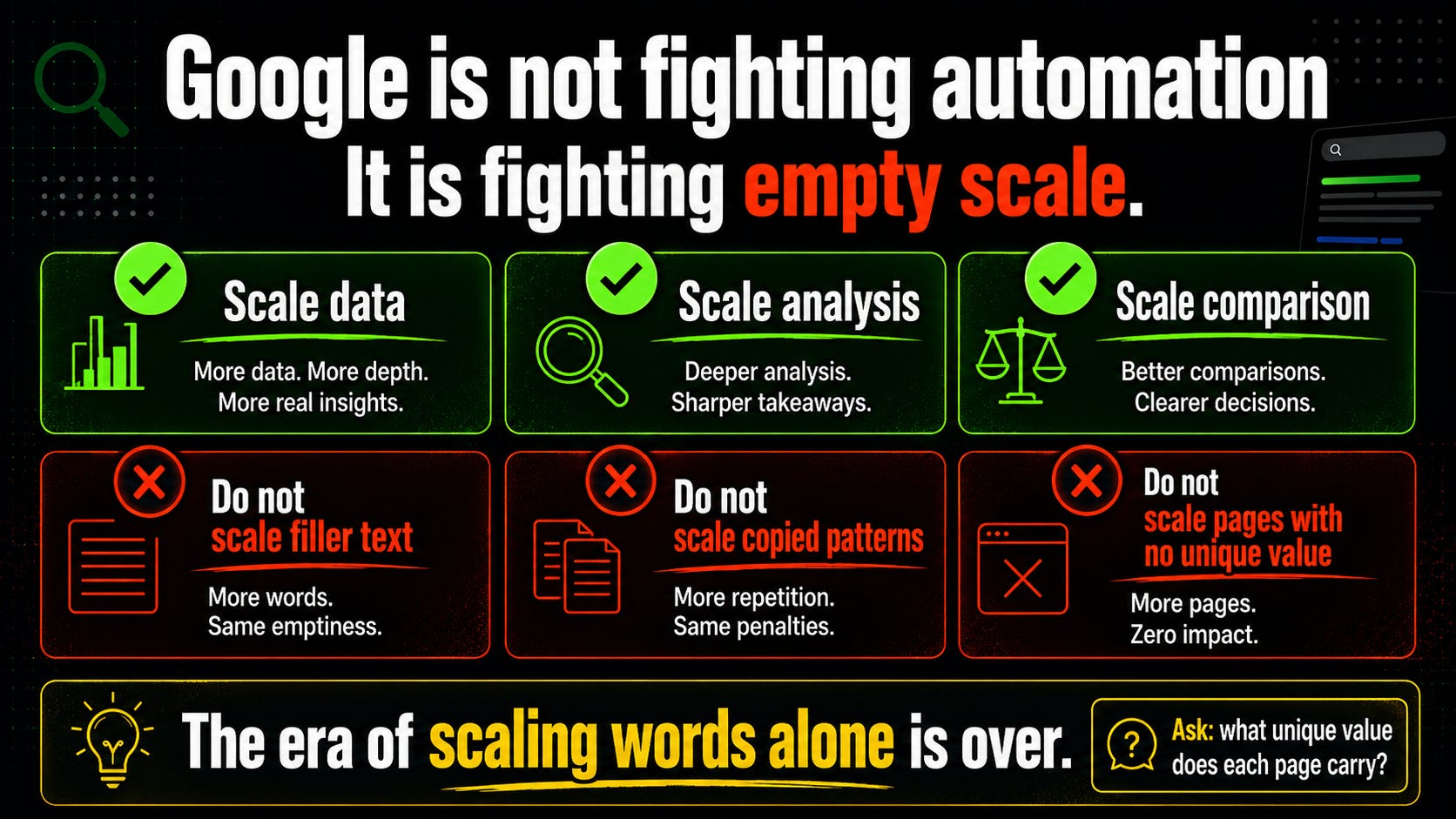
Programmatic SEO is legal. AI content is legal. Templates are legal. But worthless content, plus scale, plus ranking manipulation, equals risk. Google is not fighting automation. It is fighting empty scale.
The real advantage in SEO is no longer producing more content. It is scaling more units of unique value. Scale data. Scale analysis. Scale comparison. Scale the structures that make a user’s decision easier. The era of scaling words alone is over.
Your turn
Reply with the programmatic project you are most worried about, and tell me what unique value each page actually carries. I will tell you honestly whether it is real scale or empty scale.
Next week
I am breaking down the exact n8n pipeline I use to attach unique, per page data to programmatic templates at scale, so every generated page earns its spot instead of inflating the index.